

Canon EOS-1D X Mark III

Your favourite related products


When conditions are tough, the light is poor but the pressure’s on, the EOS-1D X Mark III lets you capture winning images before the competition. It’s the ultimate creative toolkit, with superb low-light performance, deep learning AF and 5.5K Raw video.
Faster than fast. Quicker than quick
Some moments are unrepeatable. Gone in a fraction of a second, never to come again. Preserve them forever with the EOS-1D X Mark III, capturing the action at up to 20 fps.
Some moments are over in the blink of an eye: a sprinter crossing the line or an osprey wrestling a fish from the water. There is no room for error at times like this. A fraction of a second too early or too late and and the moment will be missed – often never to be seen again. It’s for these reasons that we built the Canon EOS-1D X Mark III.
Continuous shooting at up to 20fps
The Canon EOS-1D X Mark III can capture up to 20 full-frame 20.1 megapixel images every second when shooting in live view mode, using either its mechanical shutter to capture motion faithfully or an electronic shutter for completely silent shooting.
When using the camera’s optical viewfinder the continuous shooting rate is 16fps – an extraordinary achievement for a DSLR camera, and one made possible by Canon’s expertise in mechanical engineering. direct drive motors are used to drive the reflex mirror up and down, returning it to its resting position swiftly, accurately and the minimal ‘mirror bounce’.
The Canon EOS-1D X Mark III’s shutter is rated for 500,000 shots, offering new levels of speed and reliability that give you confidence when the pressure is on.
Dual CFexpress slots
The Canon EOS-1D X Mark III uses CFexpress – the next generation of storage from the Compact Flash Association. These cards have significantly higher write speeds, allowing 20fps shooting in RAW and JPEG mode for an incredible 1000 shots without buffering, plus internal 5.5K Raw video recording.
Following feedback from professional photographers, it’s now possible to save still photos to one card and video footage to another card.
See in real time
Give yourself a competitive advantage with the Canon EOS-1D X Mark III’s superb zero-lag optical viewfinder. Watch events unfold in real-time, improving your response time and letting you capture moments before even the fastest electronic viewfinders have registered them.
The power of DIGIC X
At the heart of the Canon EOS-1D X Mark III is a single DIGIC X image processor – a device that’s much more power than previous DIGIC processors and which enables the camera to operate at incredible speed. As well as superb image quality, even in the most demanding conditions, the DIGIC X processor allows for up to 20fps continuous shooting with full autofocus, autoexposure and in-camera DLO processing.
Intelligent AF that will blow your mind
Capture images with biting clarity and sharpness. Deep learning AF algorithms recognise all kinds of situations and can even track faces hidden by goggles or a helmet
Whether you shoot with the Canon EOS-1D X Mark III’s sensational optical viewfinder or using its generous 3.1-inch touchscreen, you can’t help but notice the speed, accuracy and precision of its revolutionary AF system. Deep-learning algorithms have been programmed to identify different sports, while Face and Eye detection has been joined by advanced tracking ability that tracks athletes even when they’re wearing goggles or a helmet.
No matter how fast the action moves, the Canon EOS-1D X Mark III moves faster, adjusting focus to give you critical focus when you need it.
A dedicated imaging sensor and processor for focusing
When we introduced the EOS 650 back in 1987, we revolutionised the SLR market with line-type CMOS autofocus sensors. These are so capable that they’re still used in EOS DSLRs today – but the Canon EOS-1D X Mark III takes the next step, with a new technology.
When you compose, focus and shoot through the Canon EOS-1D X Mark III’s optical viewfinder, you’re experiencing a revolution in AF design. A dedicated CMOS imaging sensor is used exclusively for autofocus, improving accuracy and precision and allowing many more focusing points in the viewfinder. The AF processing it taken care of by a dedicated DIGIC 8 processor who’s sole job is to look after the AF when using the optical viewfinder.
The Canon EOS-1D X Mark III boasts 191 AF points, of which 155 are cross-type for extra sensitivity – perfect for nailing critical focus on fast-moving athletes and animals when light levels get low. These AF points can used on their own for highly selective focusing, in small groups and zones that can be moved around the frame, or all together with the camera selecting the best points to use automatically
The behaviour of the camera’s continuous focusing system can be adjusted according to the kind of action you’re photographing. Just choose from four case settings or use the new Auto case setting that will select the most appropriate behaviour for the task in hand.
Mirror system
For the Canon EOS-1D X Mark III to focus accurately at high continuous shooting speeds, we needed to give it a completely redesigned reflex mirror system. It’s vital that the camera’s mirrors return as quickly as possible to their resting positions between each shot, and with no ‘mirror bounce’, if they are to continue to direct light onto the AF sensor. This is something that happens inside the Canon EOS-1D X Mark III up to 16 times every second – an extraordinary achievement of mechanical engineering.
Dual Pixel CMOS AF
When using the Canon EOS-1D X Mark III like a mirrorless camera, in Live View mode, autofocusing is performed by our renowned Dual Pixel CMOS AF system. This turns virtually every pixel on the camera’s sensor into an imaging pixel and a phase-detection AF pixel.
Dual pixel CMOS AF can operate quickly when shooting stills, tracking moving objects around the frame, and more smoothly when capturing video, allowing professional pull-focus effects from one object to another.
The implementation of Dual Pixel CMOS AF technology in the Canon EOS-1D X Mark III sees focus-capable pixels over the whole height of the frame and over 90 per cent of its width. Performance has increased to a level where it’s possible to shoot at 20fps with fast, accurate, continuous focusing. The same deep-learning AF algorithm that’s available when using the camera in viewfinder mode is available to Dual Pixel CMOS AF, so you can be confident that critical sharpness is being maintained on the object, animal or person being tracked.
Remarkable quality in poor conditions
A DIGIC X processor and bespoke 20 megapixel sensor are superb in low light – up to ISO 102,400, expandable to 812,600. The EOS-1D X Mark III delivers an outstanding dynamic range
Good light, bad light, virtually no light… whatever the conditions the Canon EOS-1D X Mark III delivers superb image quality. From the depth of its shadow detail to the accuracy of its colour, you can be confident that the images you shoot will look nothing short of extraordinary.
Bespoke 20.1-megapixel CMOS sensor
The Canon EOS-1D X Mark III uses the next generation of our advanced CMOS imaging technology. A custom-designed full-frame sensor features 20.1-megapixel resolution – the ideal balance between image quality, performance and speed of workflow.
Compared with its predecessors, the Canon EOS-1D X Mark III delivers increased dynamic range, more advanced noise-reduction at all ISO sensitivities and faster read out of imaging data. Native ISO sensitivity now ranges from ISO 100 to ISO 812,900 and is expandable to an astonishing ISO 50-812,600, setting new standards in low-light performance.
The Canon EOS-1D X Mark III also features a Gaussian low pass filter (LPF), which reduces moiré more effectively than standard LPF designs while also delivering a sharper, more detailed image.
DIGIC X image processor
The Canon EOS-1D X Mark III features a single DIGIC X processor, which puts new levels of performance into the hands of photographers who accept no compromises. It also sets new standards in power efficiency. In fact, battery life is more than double that of the EOS-1D X Mark II.*
Expect to shoot at 20fps in Live View mode and at 16fps with the Canon EOS-1D X Mark III’s optical viewfinder, both accompanied by continuous AF and AE and a 1000+ shot image buffer. But the DIGIC X is about more than just speed.
DIGIC X also enables lower noise levels at all ISO sensitivities, improved sharpness with an all-new clarity adjustment, and extra dynamic range, thanks to an improved Auto Lighting Optimizer (ALO) and Highlight Tone Priority+ technology.
The DIGIC X is also the brain behind the Canon EOS-1D X Mark III’s deep-learning AF and also powers its in-camera Digital Lens Optimizer capabilities. This image processing tackles any optical issues that are not possible to correct thorough lens design alone, such as aberrations and diffraction. Since Digital Lens Optimizer doesn’t slow down the Canon EOS-1D X Mark III at all, it can now be used by news, sports and wildlife photographers shooting at top speeds.
A choice of file formats
The Canon EOS-1D X Mark III gives you plenty of choice between image file formats, so you can choose the one that’s best suited to the job in hand.
CR3 Raw files
The CR3 Raw files format now makes its way to the EOS-1D series.
- It can be shot uncompressed – maximizing image quality with huge dynamic range and 16,384 gradations per colour channel. Idea when images are going to be heavily processed in post-production.
- Or as a compressed file, saving up to 40 per cent file size with very little noticeable drop in image quality straight out of the camera.
CR3 Raw files are fully supported by our Digital Photo Professional software, which is supplied free of charge with the Canon EOS-1D X Mark III, as well as by major third-party software developers, such as Adobe and Apple.
JPEG and HEIF files
When you need to transmit your images fast, there is no substitute for JPEG files – until now that is. The Canon EOS-1D X Mark III also lets you shoot HEIF files (high efficiency image format), which is based on the HVEC video codec.
HEIF files give improved image quality, compared with JPEG files, but with roughly the same file size. The format allows 10-bit colour for more dynamic range, allowing the capture of HDR PQ images.
The compatibility of HEIF files is growing all the time, these files can also be processed in camera to produce standard JPEG files.
Hyper-accurate exposure metering
A dedicated 400k RGB+IR metering sensor takes exposure accuracy to new heights, with 400,000 pixels grouped into 216 metering zones. When you use the camera’s optical viewfinder, brightness is assessed in each zone and exposure is calculated with deadly accuracy.
This is an exposure sensor that sees like you do – in full colour. It can detect faces and other objects and help the camera’s AF system keep them in sharp focus as they move around the frame.
The sensor detects infrared as well as visible light, which helps it to recognise highly infrared-reflecting subjects and compensate for this when calculating exposure. Infrared sensitivity also helps prevent autofocusing errors in mixed light situations and improves the precision of Auto White Balance, Picture Style Auto, Auto Lighting Optimizer and Flicker Detection technologies
E-TTL Balance
The Canon EOS-1D X Mark III’s 400k RGB+IR metering sensor also enables accurate flash exposure metering, and a new E-TTL balance option has been added to give photographers more control over the way that flash and ambient light are mixed together.
The lighting ratio can be changed between Ambience priority (where natural light is the dominant light source and flash is the fill light) and Flash priority (where the roles are reversed). A standard mode is also available, in which flash and ambient light are given equal weighting similar to existing EOS cameras
A formidable filmmaking machine
When it comes to video, the EOS-1D X Mark III fits in to virtually any workflow. Capture full frame 4K 60p, or 5.5K RAW footage that opens up new creative possibilities
Creative filmmakers and visual story tellers can use the Canon EOS-1D X Mark III to shoot full-frame 4k video at 60 frames per second, recording footage internally using the 10-bit HEVC/H.265 codec with Canon Log or 12-bit Raw, for expanded dynamic range and easy colour grading during editing.
4K recording and 5.5K Raw
Whatever your editing workflow, the Canon EOS-1D X Mark III can capture footage that will fit right in and allow new levels of image quality and creativity.
Capture oversampled DCI 4K/60p video internally using the full width of the sensor*, so your lenses see the same as when you’re shooting stills. The Canon EOS-1D X Mark III can shoot in 17:9 DCI or 16:9 UHD aspect ratios and record the results using either the H.264 codec or as 10-bit H.265 codec when using Canon Log. Footage captured in this way is intentionally low in contrast, so it’s easier to colour grade in post-production.
The Canon EOS-1D X Mark III can also record 5.5K Raw video footage internally to its CFexpress cards, giving filmmakers unprecedented image quality. Expect more natural colour gradation and more dynamic range, letting you see detail in highlights and shadows that are 12 stops apart.
These 5472x2886 pixel,12-bit, CRM files can be processed using the supplied Digital Photo Pro software and is also supported by leading manufacturers of non-linear editing software. The Canon EOS-1D X Mark III can also record a 4K proxy file simultaneously, which can be used to speed up editing workflows.
Full HD recording with Dual Pixel AF is also available, at frame rates up to 120fps. Ideal for quarter-speed slow-motion effects.
Dual Pixel CMOS AF
When shooting video, Dual Pixel AF provides smooth focusing on objects selected by tapping the camera screen (or the screen of a smart device running the Canon Camera Connect app).* Faces and other objects can be tracked around the frame and the camera will smoothly re-focus to keep them sharp. You can even select which eye the focusing system should prioritise, or leave the camera to select the nearest to the camera.
* Dual Pixel AF operates in all modes except for none crop 4K or RAW at 60p/50p recording.
Focus peaking
When focusing manually, focus peaking identifies which areas of the scene are in focus by highlighting them with a coloured outline. This also shows depth of field by highlighting areas that will look sharp at the selected aperture.
Image stabilisation for movies
Movie Digital IS provides highly effective five-axis image stabilisation when you’re filming handheld – smoothing out shake caused by camera movement. An enhanced mode detects and corrects for the kind of motion encountered when walking with the camera – when tracking a moving subject, for instance.
The results are simply superb – steady, smooth professional footage that looks great alongside anything shot on dedicated high-end video cameras.
Extracting high-resolution still frames
Video captured in 4K can be used to generate 8.8 megapixel still images. Just replay the footage in question on the back of the camera in slow motion and use the shutter button to extract a still frame. This is a great approach for fast-moving subjects, which can now be shot in 4K 60p with still frames extracted afterwards.
Stay connected, stay competitive
Whether you’re in an ethernet-equipped stadium, or transmitting pictures for deadline using Wi-Fi, the EOS-1D X Mark III keeps you ahead of the competition
Get connected quickly and easily, whether you’re using the pitch-side network in a sports stadium or filing a story with your smartphone from the other side of the world. The Canon EOS-1D X Mark III makes it simpler than ever to get your pictures where they need to be – ahead of the competition.
Wireless networking
The Canon EOS-1D X Mark III features built-in Wi-Fi, which is ideal for communicating with smart devices and computers, either in the studio or on location.
Smartphones and tablets running the Camera Connect app and Digital Photo Professional Express App* can be used to browse, edit, retouch and transmit photos when you’re on the move. They can also act as a sophisticated remote control for the camera, letting you compose on the device’s screen, change camera settings and shoot still photos and video. PC and Mac computers running EOS Utility can perform these tasks too.
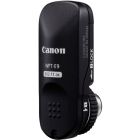
And when you need a stronger wireless connection, the option WFT-E9 wireless adapter provides you with extra range and more reliability in ‘digitally congested’ areas like football stadiums. It supports the MIMO 802.11ac standard, which uses both 5GHz and 2.4 GHz bands for communication over distances up to 150 meters and also allows connections to secure SFTP servers.
Ethernet connections
Major sports events around the world make wired ethernet connections available to trackside and pitch-side photographers so that they can transmit images back to news agencies as they shoot. That’s why we gave the Canon EOS-1D X Mark III a lightning fast gigabit ethernet socket that transmits data twice as fast as the 1D X mark II.
Connectivity settings are now grouped together in their own menu tab. It’s now possible to save up to 20 connection pre-sets for instant recall, with network access and ftp server details stored separately to reduce the amount of time it takes to get set up in a new location. Agencies can even distribute connection setting to their photographers electronically, which can be loaded into the camera via memory card.
Ethernet connectivity now supports secure SFTP protocols, which prevent images from being intercepted
| EAN | 4549292146011 |
|---|---|
| Custom Stock Status | On Special Order |
| Manufacturer | Canon |


